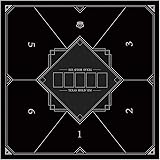
Ultimate Texas Hold’em stands as a captivating casino table game, blending elements of classic poker with strategic decision-making against a dealer. Unlike traditional Texas Hold’em where players compete against each other, UTH requires players to build the best five-card hand from seven cards (two personal, five community) to beat the dealer. The game’s appeal lies in its dynamic betting structure, allowing players to make significant wagers early if confident in their hand, as exemplified in the thrilling $3,000 Ultimate Texas Hold’em hand showcased in the video above.
This high-stakes environment demands not only a solid understanding of poker mechanics but also an expert grasp of optimal Ultimate Texas Hold’em strategy. While the adrenaline of a big pot is undeniable, consistent success in this specific variant of Texas Hold’em hinges on calculated risk and adherence to statistically sound decisions. From initial hand assessment to navigating community cards, every choice impacts your long-term expected value.
Deconstructing the Initial Hand: The Power of Big Slick
The video immediately captures attention with the player’s initial draw: King-Ace, specifically dubbed “Big Slick.” This premium starting hand in Ultimate Texas Hold’em, mirroring its strength in no-limit hold’em, presents immense potential. An Ace-King combination offers significant equity pre-flop, providing a strong foundation for both high pairs and potential flush or straight draws.
Receiving Big Slick allows a player to immediately place a 4x ante bet, demonstrating strong confidence even before the flop. This aggressive pre-flop play, betting the maximum of 2,000 behind in this specific instance, is almost always the optimal move with such a powerful hand. Opting for the 4x bet maximizes the return on your strong starting hand, putting pressure on the house and giving the player the best statistical edge against the dealer’s unknown hand.
However, it’s worth noting that while Big Slick is robust, not all starting hands warrant a 4x bet. Optimal Ultimate Texas Hold’em strategy dictates this move primarily for premium pairs (22+) and combinations featuring an Ace with a K, Q, J, or T, alongside some specific suited connectors. Conversely, weaker hands should either be folded or played cautiously with a 3x or 1x bet at later stages, preserving bankroll against unfavorable odds.
The Crucial Role of Dealer Qualification in Ultimate Texas Hold’em
A critical, and often misunderstood, aspect of Ultimate Texas Hold’em strategy revolves around the dealer’s qualification rules. For the dealer’s hand to play, it must contain at least a pair or better. Should the dealer not qualify, the ‘Play’ bet is pushed – meaning it is returned to the player – while the ‘Ante’ bet pays even money if the player’s hand beats the dealer’s non-qualifying hand. The ‘Blind’ bet, an additional mandatory wager made at the start, only pays out if the player’s hand is a straight or better, and beats the dealer, regardless of qualification.
In the video, the player explicitly checks if the dealer “qualifies” with a pair of fours. While a pair of fours is a relatively low hand, it is entirely sufficient to meet the minimum qualification threshold. Once the dealer qualifies, the player’s ‘Play’ bet becomes active, pitting their ultimate five-card hand directly against the dealer’s. Understanding this mechanism is fundamental to discerning when your bets are truly at risk versus when they might be returned.
Navigating Non-Qualification Scenarios
Consider a scenario where the dealer holds King-high and the board runs low cards with no pairs. In this instance, the dealer would not qualify. The player’s Ante bet would be paid out if their hand beats the dealer’s non-qualifying hand, and the Play bet would be a push. This situation highlights a unique aspect of Ultimate Texas Hold’em where the house edge is slightly reduced by the possibility of the dealer failing to qualify, a factor expert players account for in their decision-making processes.
Advanced Betting Strategy & Minimizing the House Edge
Understanding optimal betting strategy is paramount for anyone serious about mastering Ultimate Texas Hold’em. While the allure of chasing a Royal Flush, as mentioned by the gambler, is strong, consistently making correct decisions based on hand strength and board texture minimizes the inherent house edge over time. This involves precise decisions at three distinct betting points: pre-flop, after the flop, and after the turn.
Pre-Flop: The 4x Bet Decision
As seen with the Big Slick in the video, the 4x bet is the most aggressive pre-flop action. It is reserved for strong starting hands that have a high probability of forming a winning hand against a qualifying dealer. Beyond pairs of 2s or better and A-K, A-Q, A-J, players should also consider 4x betting certain suited Kx combinations or premium suited connectors if playing a slightly looser, but still mathematically sound, strategy. Making this bet correctly significantly reduces the overall house edge.
After the Flop: The 3x Bet Threshold
If a player chooses not to make the 4x pre-flop bet, they can then make a 3x bet after the first three community cards (the flop) are dealt. This decision point is crucial and requires evaluating the new board state. Optimal strategy for the 3x bet typically involves hands that have either hit a pair or better, or strong draws like open-ended straight draws or flush draws that still hold significant equity. For example, if you hold 9-8 and the flop comes J-T-7, giving you an open-ended straight draw, a 3x bet becomes a powerful move.
After the Turn: The 1x Bet or Fold
Should a player forgo both the 4x and 3x betting options, they face their final decision after the fourth community card (the turn) is revealed. Here, they must either make a 1x bet or fold their hand. At this late stage, the 1x bet is generally reserved for hands that have improved to at least a strong pair or better, or strong draws that are now very likely to hit. Folding is the correct decision for weak hands that have not materially improved, as continuing would only diminish expected value further against a likely qualifying dealer. Misplaying these late-stage decisions is a common pitfall for inexperienced players, leading to unnecessary losses and an increased effective house edge.
Bankroll Management for High-Stakes Ultimate Texas Hold’em
Playing Ultimate Texas Hold’em, especially at the $3,000 stakes seen in the video, necessitates robust bankroll management. High-stakes casino table games inherently carry increased variance, meaning swings in wins and losses can be substantial. A disciplined approach to managing one’s gambling funds ensures longevity at the tables and prevents ruin during cold streaks, which are an inevitable part of any form of gambling.
Establishing loss limits and win goals before each session is a fundamental principle, enabling players to walk away when appropriate, regardless of the emotional pull of the game. For instance, a player might decide to stop playing if they lose 20% of their session bankroll, or if they reach a profit target of 15%. Such boundaries impose a much-needed structure, preventing impulsive decisions driven by tilt or overconfidence.
Furthermore, it’s critical to understand that a significant bankroll is not just about having money; it’s about having enough capital to withstand natural fluctuations without impacting one’s financial stability. Players engaging in high-stakes Ultimate Texas Hold’em should only use discretionary income, ensuring that their gambling pursuits remain a form of entertainment rather than a financial burden. True experts approach the game with a clear financial strategy, much like any other investment.
Chasing the Royal Flush Dream
The ultimate prize in many poker variations, and certainly in Ultimate Texas Hold’em, is the Royal Flush. The gambler’s wish for “one time a Royal” perfectly encapsulates this universal poker dream. This exceedingly rare combination of A-K-Q-J-10, all of the same suit, offers the highest payout in UTH, often a significant multiple of the Ante and Blind bets, providing a lucrative bonus payout beyond the standard hand comparison.
While its probability is exceedingly low – approximately 1 in 649,740 hands for a specific suit in a standard 52-card deck when considering five random cards – its potential payout makes it the pinnacle of poker achievement and a thrilling, albeit infrequent, outcome that can transform a session. Many Ultimate Texas Hold’em tables also feature optional side bets, such as the Trips Bonus or the Progressive Jackpot, which pay out for certain premium hands, including the Royal Flush, further enhancing the excitement of hitting this rare beast.
However, players should approach side bets with caution. While they offer tempting payouts, they typically carry a much higher house edge than the main game. For those focused on optimal Ultimate Texas Hold’em strategy and minimizing the casino’s advantage, avoiding most side bets is often the recommended course of action. Nevertheless, the pursuit of a Royal Flush remains a captivating aspect of the game, adding an element of grand possibility to every dealt hand in Ultimate Texas Hold’em.
Folding, Calling, Raising: Your Q&A on the $3,000 Hold’em Hand
What is Ultimate Texas Hold’em?
Ultimate Texas Hold’em (UTH) is a casino table game where players try to build the best five-card poker hand to beat the dealer, rather than other players. It combines classic poker elements with strategic betting.
What is “Big Slick” in Ultimate Texas Hold’em?
“Big Slick” is a common term for a starting hand with an Ace and a King. It’s a very strong hand in Ultimate Texas Hold’em, often leading players to make the largest possible initial bet.
What does it mean for the dealer to “qualify” in Ultimate Texas Hold’em?
For the dealer’s hand to play in Ultimate Texas Hold’em, they must have at least a pair or better. If the dealer doesn’t qualify, your “Play” bet is returned, and your “Ante” bet pays if your hand beats theirs.
When can you place bets in Ultimate Texas Hold’em?
You can make bets at three main points: 4x your ante before any community cards (pre-flop), 3x your ante after the first three community cards (flop), or 1x your ante after the fourth community card (turn), or you can choose to fold.